
Coverage Period: 4 March 2026 – Present
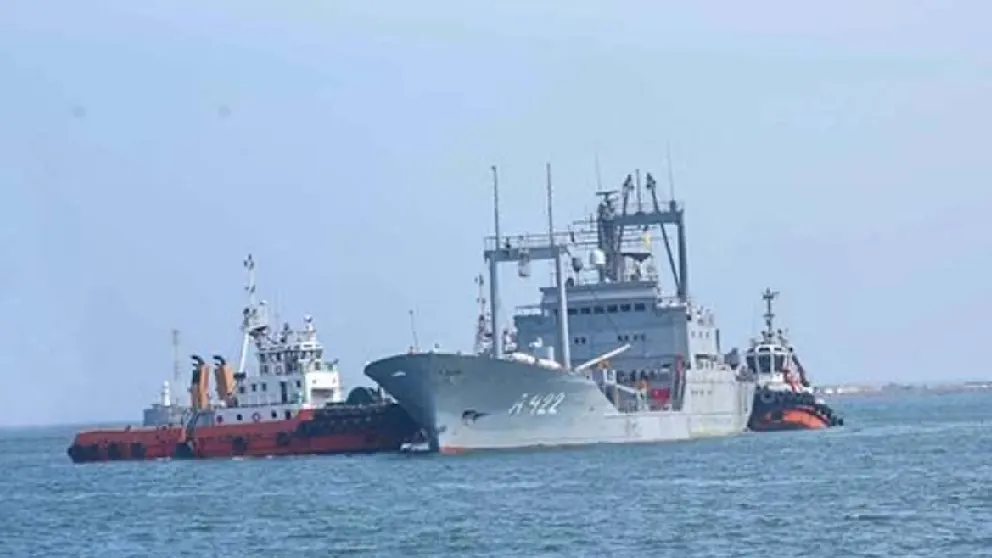
The Indian Ocean has long served as the world’s silent highway, a blue expanse where the primary concerns were monsoon cycles and the rhythmic transit of colossal tankers. That silence was shattered on March 4, 2026, when the deep-water tranquility south of Sri Lanka was torn apart by a torpedo impact. The sinking of the Iranian frigate IRIS Dena by a United States submarine did more than send a warship to the seabed; it dragged the gravity of the Middle East war thousands of miles eastward, signaling a violent transformation of the Indian Ocean into an active theater of naval power projection.
Executive Summary: A Conflict Unbound
The destruction of the IRIS Dena stands as the first major naval combat incident of the current war to occur outside the immediate periphery of the Persian Gulf. Since that pivotal morning, the conflict has metastasized. Iran has pivoted from traditional territorial defense to aggressive maritime asymmetric warfare, effectively turning the Strait of Hormuz into a gauntlet of drone swarms and missile threats.
What began as a targeted U.S.-Israeli campaign against Iranian infrastructure—dubbed Operation Epic Fury—has now evolved into a systemic challenge for the entire Indian Ocean Region (IOR). Global energy flows are staggering, naval deployments in the Arabian Sea are reaching heights not seen since 2003, and the security of the maritime commons is facing its most severe test in the 21st century.
The Chokepoint War: Escalation at Sea
In the days following the Dena sinking, the maritime domain has become the primary laboratory for escalation. The “Tanker War” of the 1980s has returned, but with 21st-century lethality.
- The Hormuz Stranglehold: Following the loss of their frigate, the Islamic Revolutionary Guard Corps (IRGC) declared the Strait of Hormuz “closed,” threatening to set ablaze any vessel attempting passage. While not a legal blockade, the reality on the water is stark: over 150 tankers currently sit at anchor in the Gulf, paralyzed by a combination of kinetic drone strikes and sustained GPS jamming.
- The Shadow of the Drone: Attacks on commercial shipping are no longer confined to the northern reaches. Unidentified “loitering munitions” and unmanned surface vehicles (USVs) have been reported as far south as the Gulf of Oman, hitting flag states as diverse as the UAE and the Marshall Islands. This expansion has forced a massive surge in patrols, with the U.S. “Armada”—now including two carrier strike groups and over a dozen destroyers—scrambling to provide a shield over the Arabian Sea.
A Multi-Front Regional Fire
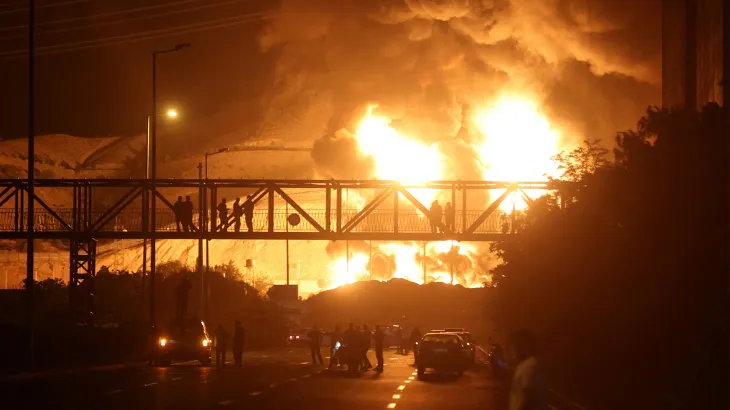
While the oceans churn, the land remains a flashpoint. Iranian retaliatory strikes have not been limited to Israel. U.S. and allied facilities across Saudi Arabia, the UAE, Qatar, and Bahrain have faced waves of missile and drone barrages. These strikes have targeted not just military assets, but critical economic infrastructure, including the Ras Laffan LNG facilities in Qatar and the Fujairah oil terminal.
This regional expansion indicates a desperate Iranian strategy: to raise the “cost of alignment” for Gulf states until the global economic pain forces Washington and Jerusalem to the negotiating table. For the Indian Ocean Rim, this means the conflict is no longer a localized fire; it is a regional inferno with embers drifting across the entire basin.
The Economic Aftershock: The $100 Barrel
The global marketplace is reacting with predictable, if panicked, volatility. The Indian Ocean’s primary export—stability—has evaporated.
- Energy Shocks: Disruption to the 20% of global oil and LNG transiting Hormuz has pushed Brent crude above $82 per barrel, with Goldman Sachs warning of $150 if the impasse lasts through March.
- The Insurance Barrier: “War Risk” premiums for Indian Ocean transits have reached prohibitive levels. Major shipping conglomerates like Maersk and Hapag-Lloyd are now rerouting vessels around the Cape of Good Hope, adding 10–14 days to journey times and billions to global logistical costs.
- Market Paralysis: From the Nikkei in Tokyo to the KSE in Karachi, stock markets across the IOR have seen historic single-day declines as investors price in a “worst-case scenario” for Asian energy security.
The Core Challenge for Indian Ocean Rim Nations
The events since March 4 represent a fundamental strategic shift for every nation bordering these waters.
- The Emerging Strategic Theatre: The Indian Ocean is no longer the “hinterland” of Middle Eastern instability; it is the front line. The IRIS Dena incident proved that naval combat can and will occur in these waters, potentially turning the Arabian Sea into a permanent “Hot Zone.”
- Asian Energy Vulnerability: For India, China, Japan, and South Korea, the disruption is existential. These nations account for 75% of the oil flowing through the Strait. A prolonged conflict threatens the very foundation of Asian industrial stability, forcing a frantic search for alternative energy routes and strategic reserves.
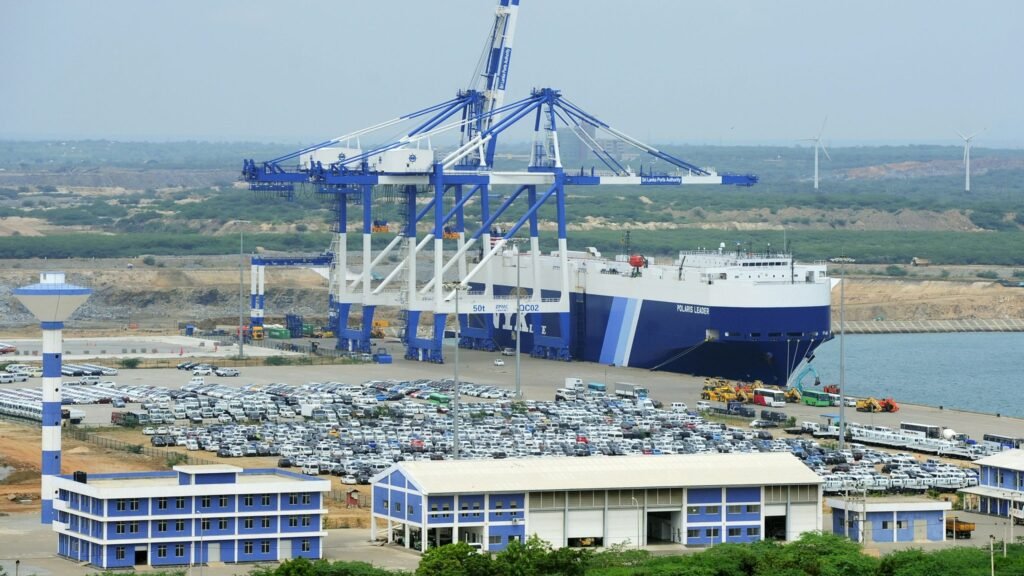
- The New Importance of Ports: Locations like Colombo (Sri Lanka), Hambantota (Sri Lanka), Mumbai (India), and Salalah (Oman) are shifting from commercial hubs to critical strategic nodes. They are now essential for naval logistics, humanitarian coordination for rescued crews, and as “safe harbors” for vessels fleeing the combat zones.
- Militarized Waters: We are witnessing a “Naval Arms Race” in real-time. India has increased its long-range maritime surveillance, while European nations are deploying frigates to protect their specific interests. This could produce a more militarized and combustible maritime environment long after the current war concludes.
Indicators of a Darkening Horizon
To gauge the next phase of this crisis, analysts must monitor three specific early-warning signals:
- Mining Operations: Any evidence of Iranian sea mines drifting into the open Arabian Sea.
- Submarine Proliferation: Increased activity from Iranian Kilo-class submarines moving toward the central Indian Ocean.
- Infrastructure Sabotage: Potential attacks on undersea fiber-optic cables or desalination plants that sustain the coastal cities of the Gulf.
Strategic Conclusion
The era of the Indian Ocean as an insulated trade corridor is over. The events since the sinking of the IRIS Dena demonstrate how quickly a regional military campaign can transform into a systemic global crisis. What began as a confrontation in the streets of Tehran and the skies over the Levant has reached the shores of Sri Lanka and the boardrooms of Mumbai. For the nations of the Indian Ocean Rim, the challenge is no longer just managing trade; it is surviving the new era of maritime rivalry that has arrived with the tide.