
In the annals of maritime history, 2025 will likely be recorded not as a year of explosive conflict, but as the year of “structural erosion.” While the world’s attention was often diverted by the high-velocity crises of the Levant and the Pacific, the Indian Ocean Region (IOR) sent a series of quiet, persistent signals that the old order has reached its limit. From the internal political shifts in Bangladesh and Tanzania to the hardening of naval postures from the Bay of Bengal to the Mozambique Channel, 2025 normalized risks that were unthinkable a decade ago. As we look toward 2026, the buffers—economic, institutional, and diplomatic—that once prevented friction from becoming fire have worn thin. This is the year the “quiet center” began to hum with the resonance of a coming storm.
I. The Year of Normalization: Beyond the “Crisis” Narrative
In geopolitical analysis, there is a tendency to hunt for “Black Swan” events—sudden, unpredictable disruptions. However, 2025 was defined by the “Grey Rhino”: the highly probable, high-impact trends that we have collectively chosen to ignore until they become part of the furniture.
A decade ago, the permanent presence of a Chinese carrier strike group in the Indian Ocean would have triggered an emergency summit in New Delhi or a “red alert” in Washington. In 2025, it became a weekly line item in maritime domain awareness reports. Similarly, the use of low-cost asymmetric drones by non-state actors to disrupt the Bab el-Mandeb—once a localized tactical nuisance—has now been institutionalized as a permanent feature of maritime insurance premiums and global shipping routes.
2025 was the year the Indian Ocean Region transitioned from a “zone of cooperation” to a “theater of persistent friction.” We have normalized the militarization of commercial ports, the weaponization of undersea data cables, and the use of “fishing militias” as sovereign placeholders. By accepting these as the baseline of 2026, we have effectively reset the “zero point” of regional stability.
Why does the Indian Ocean matter so much in the first place? Read our foundation article here.
II. Domestic Stress as Regional Vulnerability
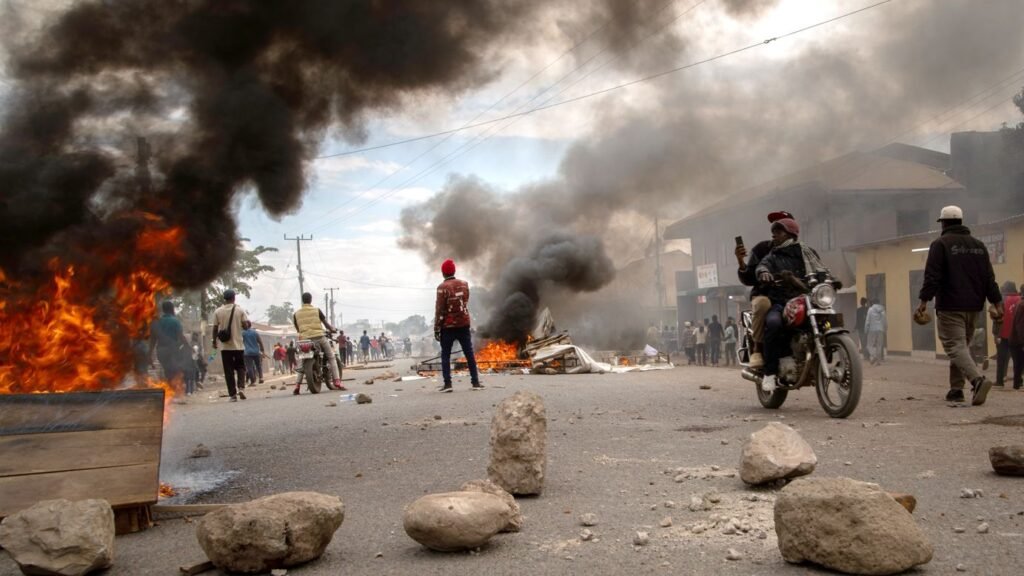
The most profound signal of 2025 was the collapse of the firewall between domestic politics and regional security. In the IOR, a “local” crisis is rarely local for long.
1. Bangladesh: The Bay of Bengal’s New Calculus
Following the seismic political shifts of late 2024 and early 2025, Bangladesh spent the year navigating a precarious transition. For decades, Dhaka was the “stable pivot” of the Bay of Bengal. In 2025, however, the domestic struggle to redefine Bangladeshi identity and its foreign policy alignment sent tremors through the region.
India, long the dominant influencer in Dhaka, found itself facing a “trust deficit” that China and the Gulf states were quick to exploit. The signal from Dhaka in 2025 is clear: the era of “stable client states” is over. In 2026, the Bay of Bengal will become more contested as Bangladesh seeks to balance its “Indo-Pacific” aspirations with its immediate economic dependence on Chinese infrastructure and Indian energy.
2. Indonesia: The Pragmatic Titan
2025 marked the first full year of the Prabowo Subianto presidency. Jakarta’s signal was one of “armed neutrality.” While Indonesia continued to lead ASEAN’s maritime dialogues, it also accelerated its naval modernization, specifically focusing on the North Natuna Sea.
Prabowo’s “Good Neighbor” policy in 2025 was a masterclass in ambiguity—simultaneously welcoming Chinese investment in the “Blue Economy” while conducting high-profile exercises with the U.S. and Australia. However, this balance is fraying. As China pushes further south, Indonesia’s role as the “gatekeeper” of the Malacca and Sunda straits will be the defining variable of 2026.
3. Tanzania and the East African Gateway
In East Africa, Tanzania emerged in 2025 as the new frontier of the “Port Wars.” The revitalization of the Bagamoyo Port project—re-engineered with a mix of Chinese capital and Emirati management—signaled a shift in how East African littoral states view their leverage. Tanzania is no longer just a destination for aid; it is a strategic node in the “Middle Corridor” linking the Indian Ocean to the African interior. The internal pressure for rapid industrialization is forcing Dodoma to play great powers against one another, a high-stakes game that reduces the region’s overall diplomatic stability.
III. The Maritime Symptom: Incidents as Language
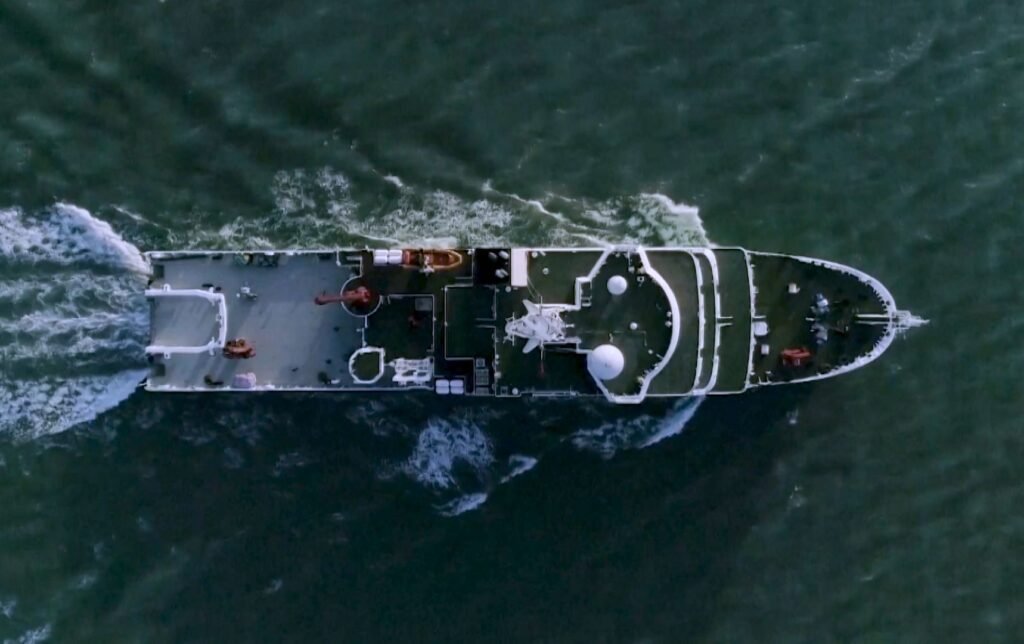
In 2025, maritime security incidents moved from being “crimes” (piracy, smuggling) to being “messages.” When a “research vessel” lingers over a specific cluster of undersea cables off the coast of Mauritius, or when a “commercial dhow” is found carrying sophisticated telemetry equipment in the Arabian Sea, these are not isolated events. They are the vocabulary of a new, undeclared competition.
The 2025 “shadow war” at sea highlighted three key symptoms:
- The Death of the “Global Commons”: The idea that the high seas are a neutral space for all has been replaced by “functional sovereignty,” where powerful navies assert informal control over specific corridors.
- The Rise of the Middle Powers: 2025 saw the UAE, Turkey, and Iran project naval power further from their shores than ever before. The UAE’s expansion of its “string of bases” in the Horn of Africa and the Socotra Archipelago has created a new, non-Western security architecture that operates outside traditional UN or NATO frameworks.
- Institutional Lag: The Indian Ocean Rim Association (IORA) spent 2025 mired in bureaucratic inertia. While the threats evolved at the speed of a hypersonic missile, the regional response remained at the speed of a paper memo.
IV. Declining Buffers: Why 2026 Matters More
Why should the “quiet” signals of 2025 alarm us for 2026? Because the buffers that historically absorbed these shocks have evaporated.
- The Economic Buffer: In the 2010s, the “Belt and Road” and Western FDI provided a floor for regional stability—no one wanted to break the machine that was making them rich. In 2025, debt distress in Maldives, Sri Lanka, and Pakistan has turned economic ties into chains. When states are desperate, they make “sovereignty-for-security” trades that destabilize their neighbors.
- The Institutional Buffer: The “Rules-Based Order” is now a hollow phrase in the IOR. UNCLOS (UN Convention on the Law of the Sea) is increasingly treated as a menu rather than a mandate.
- The Diplomatic Buffer: The direct hotlines between New Delhi, Beijing, and Washington are either silent or used for post-facto complaining rather than pre-crisis de-escalation.
V. Conclusion: The Warnings for 2026
If 2025 was the year of the signal, 2026 will be the year of the response. We should watch for three specific “Tripwires”:
- The “Island Bastion” Strategy: Watch for the further militarization of small island nations (Seychelles, Mauritius, Maldives). These are no longer tourist paradises; they are “unsinkable aircraft carriers” in a naval chess game.
- The Energy Transition Pivot: As the world moves toward green hydrogen and critical minerals, the IOR’s choke points will remain vital, but the “cargo” will change. Competition over the deep-sea mining of the Indian Ocean’s nodules will become a new flashpoint.
- The “Internal-External” Collapse: Watch for a domestic crisis in a key littoral state (like Pakistan or Mozambique) to be used as a pretext for “humanitarian” intervention by an external naval power, leading to a permanent base presence.
2025 told us that the Indian Ocean is no longer “quiet.” It is vibrating with the energy of a region that has outgrown its old skin but has not yet grown a new one. For the strategist, the task for 2026 is not to predict the next crisis, but to understand that the crisis is already here—it’s just waiting for a spark.