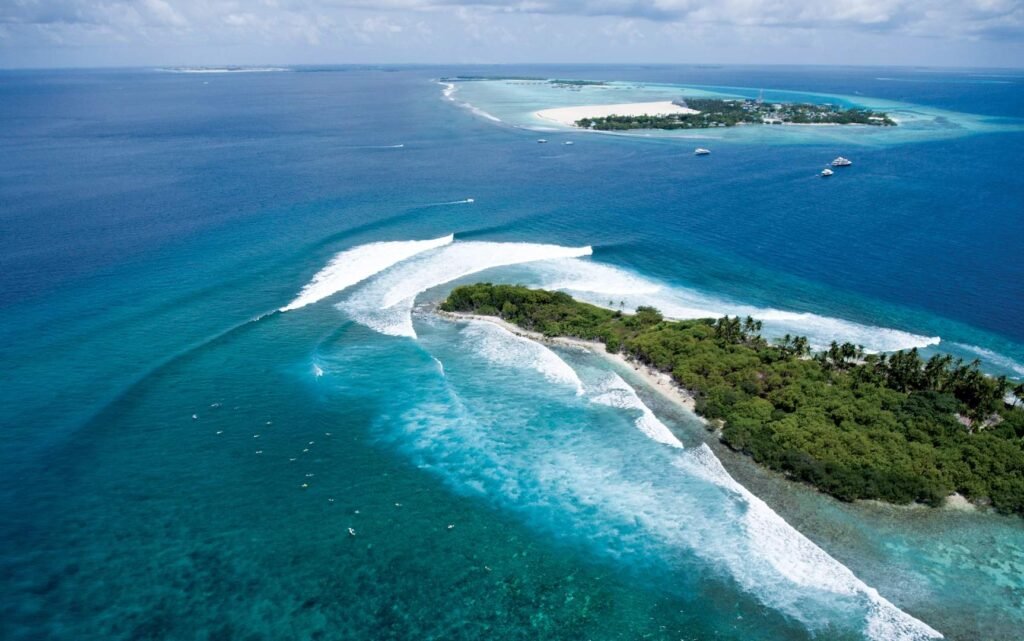
The Indian Ocean is often described as the “heart of the global economy,” a vast expanse that bridges the industrial giants of East Asia with the energy reservoirs of the Middle East and the emerging markets of Africa. Yet, as the recent naval engagements in the Arabian Sea and the sinking of the IRIS Dena have shown, this vital artery is increasingly becoming a theater of high-stakes competition.
In this climate of rising temperatures and shifting tides, two pillars of maritime order stand between stability and chaos: the United Nations Convention on the Law of the Sea (UNCLOS) and the Indian Ocean Rim Association (IORA). To understand how we can navigate the current geopolitical storm, we must first look at where these frameworks came from and why their partnership is the only way forward.
The “Constitution of the Oceans”: The Birth of UNCLOS
Before the mid-20th century, the rules of the sea were a patchwork of “might makes right” and ancient customs. For centuries, the “Freedom of the Seas” doctrine—championed by the Dutch jurist Hugo Grotius—meant that a nation’s territory ended at the range of its shore-based cannons (roughly three miles), while everything beyond was a lawless frontier.
However, as technology advanced, so did our ability to exploit the deep. Post-WWII, nations began claiming vast swaths of the ocean floor for oil, gas, and fishing. This “scramble for the sea” threatened to turn the oceans into a battlefield for territory. In 1973, the UN convened the Third United Nations Conference on the Law of the Sea to draft a definitive rulebook. It took nine years of grueling negotiations to reach a consensus.
When UNCLOS was finally adopted in 1982 (entering into force in 1994), it became the “Constitution of the Oceans.” It achieved something unprecedented: it codified the rights and responsibilities of every nation on earth regarding the sea. It established the Exclusive Economic Zone (EEZ)—granting coastal states rights up to 200 nautical miles—and created the International Tribunal for the Law of the Sea (ITLOS) to settle arguments with gavels instead of guns.
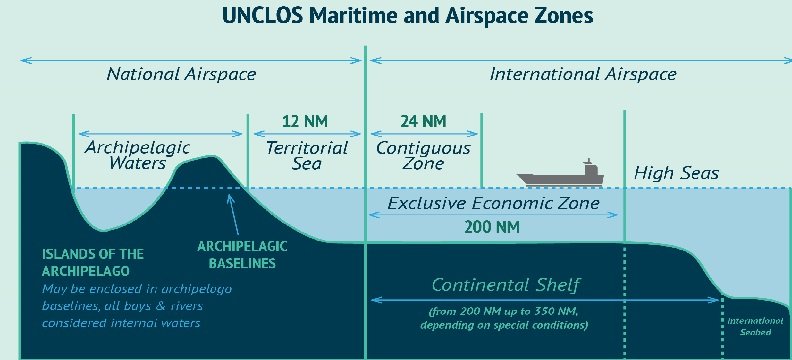
For the Indian Ocean, UNCLOS was a lifesaver. It provided a common language for dozens of newly independent post-colonial states to assert their maritime sovereignty without constant border skirmishes.
A Table for the Rim: The Origin and Role of IORA
While UNCLOS provided the law, it did not necessarily provide the community. By the mid-1990s, the nations bordering the Indian Ocean realized that while they were legally bound by UNCLOS, they were diplomatically disconnected.
The vision for a regional body came from a 1995 visit to India by South Africa’s Nelson Mandela. He spoke of an “Indian Ocean Rim for Socio-Economic Cooperation,” a platform where states from three continents—Africa, Asia, and Australia—could find common ground. In 1997, the Indian Ocean Rim Association (IORA) was born.
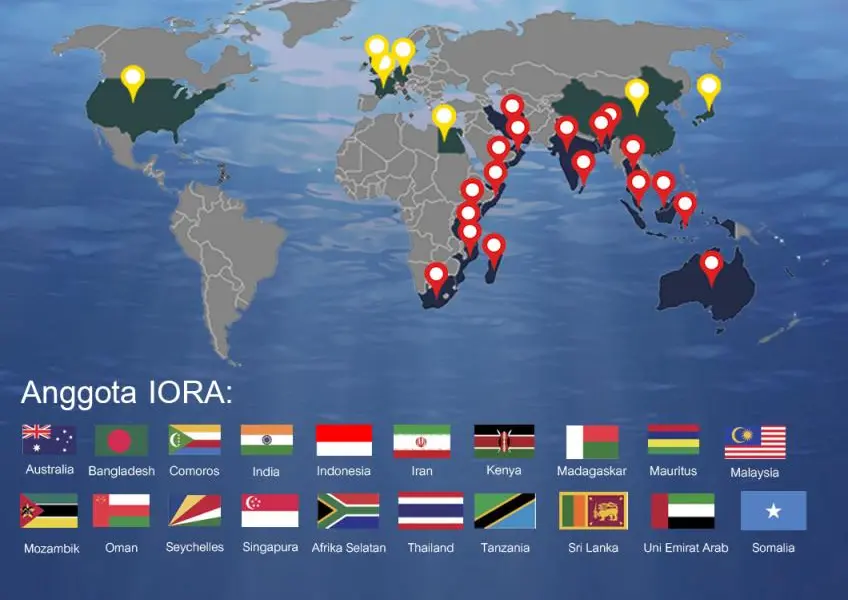
Unlike the UN, IORA is not a regulatory body. It is a regional forum designed to foster “open regionalism.” Its role is to facilitate dialogue on:
- Maritime Safety and Security: Coordination on piracy and disaster relief.
- Trade and Investment: Reducing the friction of commerce across the rim.
- The Blue Economy: Ensuring that the extraction of ocean resources is sustainable.
IORA’s strength lies in its inclusivity. From the massive economy of India to the strategic island nation of Mauritius and the industrial hub of Indonesia, IORA brings 23 member states to the table to discuss shared challenges that UNCLOS alone cannot solve.
The Critical Juncture: Why UNCLOS Needs IORA Now
We are currently at a “critical juncture” in maritime history. The rules-based order established by UNCLOS is under extreme pressure. From the weaponization of maritime chokepoints like the Strait of Hormuz to the “grey zone” tactics of deploying state-sponsored militias at sea, the “Constitution” is being tested by those who find its limits inconvenient.
Legal frameworks are, by nature, reactive. UNCLOS tells you what is legal, but it cannot force a state to behave well in real-time. This is where IORA must step up to strengthen the legal framework through regional action.
1. Turning Legal Rights into Collective Security
UNCLOS grants states the right to “Freedom of Navigation,” but a right is meaningless if a tanker is being harassed by drones. IORA can strengthen this principle by establishing a regional Maritime Domain Awareness (MDA) network. By sharing satellite data and ship-tracking information, IORA members can collectively identify threats before they reach a chokepoint, effectively acting as the “eyes and ears” of the UNCLOS framework.
2. Managing the “Scramble for Resources”
UNCLOS defines the boundaries of the EEZ, but it doesn’t manage the fish or the minerals within them. As climate change shifts fish stocks and the race for “blue minerals” intensifies, disputes over resources are the most likely triggers for war. IORA can create “Regional Resource Management Agreements.” By coordinating how much we fish and where we drill, IORA can ensure that nations don’t feel the need to use their navies to “defend” resources from their neighbors.
3. Capacity Building for Smaller Nations
A law is only as strong as its enforcement. Many small island states in the Indian Ocean lack the coast guards or legal expertise to protect their UNCLOS-defined waters from illegal, unreported, and unregulated (IUU) fishing. IORA can bridge this gap through “Technical Cooperation.” Larger members like India and Australia can provide training and hardware to smaller states, ensuring that the entire Rim—not just the wealthy nations—can uphold maritime law.
4. A Pressure Valve for Geopolitical Rivalry
When two nations have a maritime dispute, the legal process at ITLOS can take years. In the meantime, tensions can boil over. IORA serves as a vital “pressure valve.” It allows for informal, “Track II” diplomacy where ministers can discuss maritime grievances over coffee rather than through formal legal filings. By de-escalating tensions early, IORA prevents minor boundary disputes from becoming the next major naval crisis.
Conclusion: Strengthening the Blue Architecture
The Indian Ocean is currently witnessing a collision between the old world of geopolitical rivalry and the modern world of international law. The sinking of vessels and the disruption of energy flows are symptoms of a system under strain.
UNCLOS remains the bedrock—the essential legal foundation upon which all maritime activity is built. But a foundation is not a house. IORA provides the walls, the roof, and the rooms where the actual living and working happen.
At this present critical juncture, the future of the Indian Ocean depends on these two systems working in tandem. We need the legal certainty of UNCLOS to know where the lines are drawn, and we need the diplomatic agility of IORA to ensure that no one feels the need to cross them. If the Indian Ocean Rim nations can successfully leverage IORA to reinforce UNCLOS, they will do more than just protect trade; they will secure a peaceful and prosperous “Blue Century” for half the world’s population.