
To the map-maker, the Indian Ocean is a vast blue expanse bounded by three continents. To the strategist, it is something entirely different: a “Mandala of Interests”—a complex, overlapping system where every actor views the water through a unique and often contradictory lens. While the world’s navies agree that trade must flow, they disagree profoundly on who should guard it and how it should be governed. This evergreen analysis explores the fundamental dependencies of the region’s key players, arguing that the Indian Ocean’s instability stems not from a lack of interest, but from a surplus of misaligned incentives.
If you missed our foundation explainer on the significance of Indian Ocean, find it here.
I. The Consumers: East Asia’s Existential Lifeline
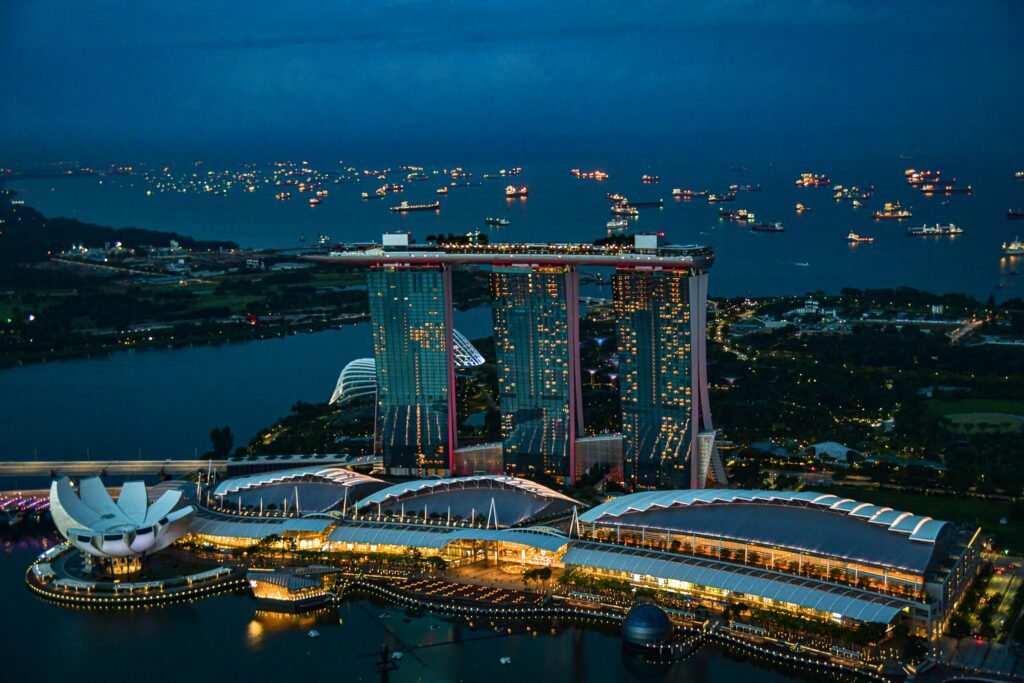
For the industrial giants of East Asia—China, Japan, and South Korea—the Indian Ocean is not a “territory” to be owned, but a “conveyor belt” that must never stop. Their interest is primarily extractive and logistical.
- The Dependency: These nations are the world’s primary “energy consumers.” Roughly 80% of China’s oil imports and nearly 90% of Japan’s transit the Indian Ocean. Without these waters, the lights go out in Shanghai, Tokyo, and Seoul within weeks.
- The Strategic Fear: The “Malacca Dilemma.” East Asian powers fear a “vertical blockade”—a situation where a hostile power (typically the U.S. or India) chokes off the entrance to the South China Sea.
- The Behavior: This fear drives China’s “String of Pearls” and Japan’s “Partnership for Quality Infrastructure.” They are compelled to build “safe harbors” and logistics hubs (like Gwadar or Djibouti) to ensure their lifeline remains open. For them, the Indian Ocean is a high-stakes transit corridor that requires a permanent naval presence to “escort” their economic survival.
II. The Producers: The Gulf’s Search for Market Security
On the western rim, the Gulf monarchies and Middle Eastern states view the Indian Ocean as their primary export terminal. Their relationship with the ocean is the inverse of East Asia’s.
- The Dependency: For Saudi Arabia, the UAE, and Qatar, the Indian Ocean is the gateway to their most valuable customers. As Western demand for fossil fuels fluctuates, the “Pivot to Asia” has made the IOR the most critical geography for their national budgets.
- The Strategic Fear: The “Horizontal Blockade.” Their nightmare is a disruption at the Strait of Hormuz or the Bab el-Mandeb that prevents their only product from reaching the market.
- The Behavior: We are seeing the rise of “Logistics States.” The UAE, in particular, has moved from being an oil producer to a maritime power, managing ports from Berbera to Colombo. Their interest is in market access and stability, often leading them to act as “mini-lateral” balancers between Western security guarantees and Chinese economic investment.
III. The Resident: India’s Backyard Ambitions
India is the only major power that views the Indian Ocean as its sovereign sphere of influence and primary security theater. For New Delhi, the ocean is an extension of its geography.
- The Dependency: India is a “peninsular power.” Over 90% of its trade by volume and 70% by value moves by sea. Unlike China, which has a Pacific coast, India’s strategic focus is 360-degrees maritime.
- The Strategic Fear: “Encirclement.” India fears the permanent presence of extra-regional powers—specifically China—in its “backyard.” New Delhi views every Chinese-built port in the IOR as a potential naval base that threatens its strategic depth.
- The Behavior: India adopts the role of the “Net Security Provider.” Its focus is on Maritime Domain Awareness (MDA)—knowing everything that moves in the central IOR. From the Andaman and Nicobar Islands to the shores of Mauritius, India seeks to be the “anchor” of the region, preferring a “hub-and-spoke” security model with itself at the center.
IV. The Gatekeepers: Island Nations and East African Littorals
For the smaller states—the Maldives, Seychelles, Mauritius, and the East African coastline—the Indian Ocean is their sovereign capital.
- The Dependency: These are the “Transit States” and “Gatekeepers.” Their geography is their greatest asset and their greatest curse. They depend on the ocean for fisheries (the Blue Economy), tourism, and increasingly, “strategic rents.”
- The Strategic Fear: “Irrelevance or Occupation.” They fear being bypassed by new trade routes (like the Northern Sea Route) or being forcibly drawn into a great-power conflict that they cannot control.
- The Behavior: These states practice “Strategic Hedging.” They lease land for bases to the highest bidder, play India against China for infrastructure loans, and use multilateral forums (like the African Union or IORA) to punch above their weight. For them, the IOR is a marketplace of influence.

V. The Structural Paradox: Shared Interest vs. Misaligned Incentives
The Indian Ocean suffers from a unique geopolitical ailment: Everyone wants the same outcome (safe trade), but no one trusts the others’ methods of achieving it.
This creates three core “Misalignments” that drive instability:
- The Protection Paradox: China wants to protect its ships. To do so, it sends a navy. India sees that navy as a threat. India increases its own naval presence to counter China. The result? The ocean is more “protected” but significantly more tense. The act of “securing” the commons by one actor is viewed as “militarizing” the commons by another.
- The Development vs. Debt Misalignment: East African and Island nations need infrastructure. China provides it via the Belt and Road Initiative (BRI). India and the West see this as “debt-trap diplomacy.” The result is a fragmented infrastructure landscape where ports are built for political signaling rather than economic logic, creating “white elephants” that become strategic liabilities.
- The Governance Vacuum: The Indian Ocean has no NATO. The IORA (Indian Ocean Rim Association) is an economic forum, not a security one. Because the actors have fundamentally different dependencies (some want to buy, some want to sell, some want to rule), they cannot agree on a single set of rules.
VI. Historical Lens: The Return of the “Station” System
The current era most resembles the 19th-century “Coaling Station” competition. In the 1800s, the British Empire secured the IOR by holding “stations” (Aden, Singapore, Colombo, Mauritius). Today, we see a digital and kinetic version of this. Instead of coal, the new “stations” are fiber-optic landing sites, LNG terminals, and drone bases.
The danger, as in the 19th century, is that these “stations” become tripwires. A small incident at a “dual-use” port in Sri Lanka or a “logistics facility” in Djibouti can escalate into a global crisis because the dependencies of Beijing, New Delhi, and Washington are all tied to that single point of failure.
VII. Forward-Looking Perspective: The 2030 Horizon
As we move toward 2030, the “Mandala of Interests” will become more crowded. The entry of “New Actors” like Turkey, Iran, and even Russia into the IOR security architecture suggests that the era of “duopoly” (US-India or US-China) is ending.
The stability of the Indian Ocean will not come from one power “winning” the region. It will come from a move toward functional de-confliction—an agreement that while actors may not share values or alliances, they share a common vulnerability. The Indian Ocean is a system no actor can control alone, but it is a system that any actor can break.