
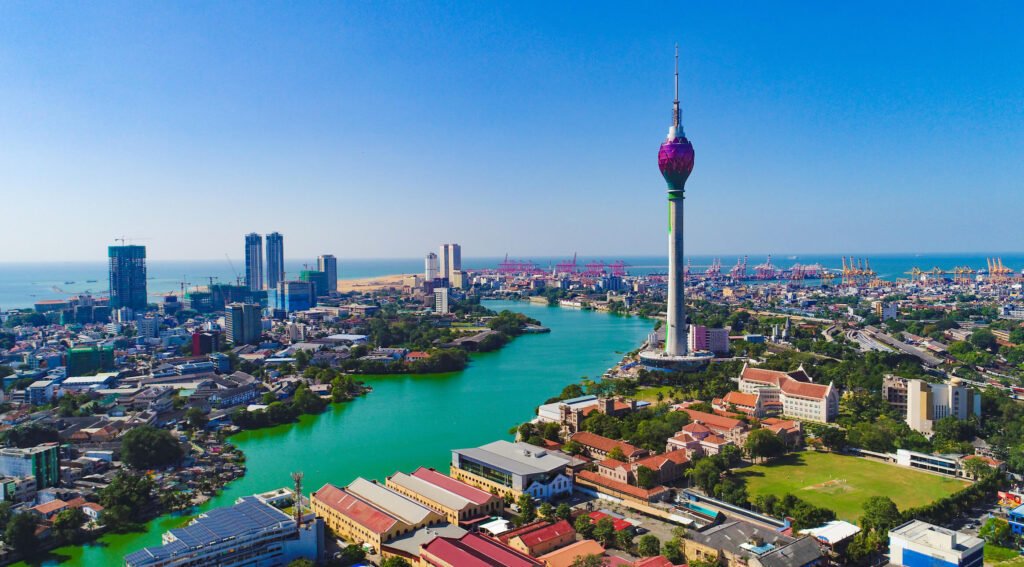
To look at a map of the Indian Ocean is to see a vast liquid expanse punctuated by a single, perfectly placed teardrop. Sri Lanka does not merely sit in the Indian Ocean; it commands it. Positioned exactly halfway between the fuel-rich Gulf and the manufacturing hubs of East Asia, the island has served as the ocean’s primary “service station” and “watchtower” for over two millennia. As we navigate the high-stakes maritime competition of 2026, understanding Sri Lanka’s present requires unearthing a strategic DNA that has remained remarkably consistent since the era of the Silk Road.
Sri Lanka’s leverage is inseparable from the Indian Ocean’s role as the central artery of global trade, energy flows, and strategic competition.
I. The Pre-Colonial Era: “The Great Emporium” (600 BC – 1505 AD)
Long before the term “geopolitics” was coined, Sri Lanka was already a global node. In the 6th century AD, the Alexandrian merchant-monk Cosmas Indicopleustes described the island as the “Great Emporium,” a transit hub where ships from Rome, Ethiopia, Persia, and China met to exchange silk, cloves, and sandalwood.
- The Port of Mantai: Located on the northwest coast, Mantai was the “Dubai of the ancient world.” It was the primary link in the Maritime Silk Road, connecting the Greco-Roman world with the Han Dynasty.
- Gokanna (Trincomalee): While Mantai handled trade, the bay of Gokanna (modern-day Trincomalee) was recognized early on for its sheer physical depth and protection from the monsoons. It allowed ancient mariners to wait out seasonal wind reversals, making the island a mandatory stop, not an optional one.
- Cultural Diplomacy: Sri Lanka’s strategic value was matched by its soft power. As a center of Theravada Buddhism, it used religious diplomacy to build networks with Southeast Asian kingdoms, establishing a “Zone of Influence” that predated modern security blocs.
II. The Colonial Era: The Militarization of Geography (1505 – 1948)
When the Portuguese arrived in 1505, they transformed Sri Lanka from a commercial partner into a military asset. This era introduced the concept of the “Fortress Island.”
- The Portuguese & Dutch (1505–1796): These powers focused on controlling the lucrative cinnamon trade and the pearl banks of Mannar. The Portuguese famously destroyed the ancient Koneswaram Temple in Trincomalee to build a fort, signaling that in the colonial mindset, strategic location overrode indigenous sanctity.
- The British “Gibraltar of the East”: The British realized that whoever held Trincomalee held the Bay of Bengal. Admiral Horatio Nelson famously called it “the finest harbor in the world.”
- World War II Pivot: The strategic peak of the colonial era occurred in 1942. After the fall of Singapore, the British Eastern Fleet retreated to Trincomalee. The island became the “unsinkable aircraft carrier” for the Allied defense against Japan, proving that when the Pacific is lost, the Indian Ocean—and specifically Sri Lanka—becomes the world’s last line of defense.
Read our article on maritime chokepoints that structure global risk.
III. The Cold War Era: The Perils of Non-Alignment (1948 – 1991)
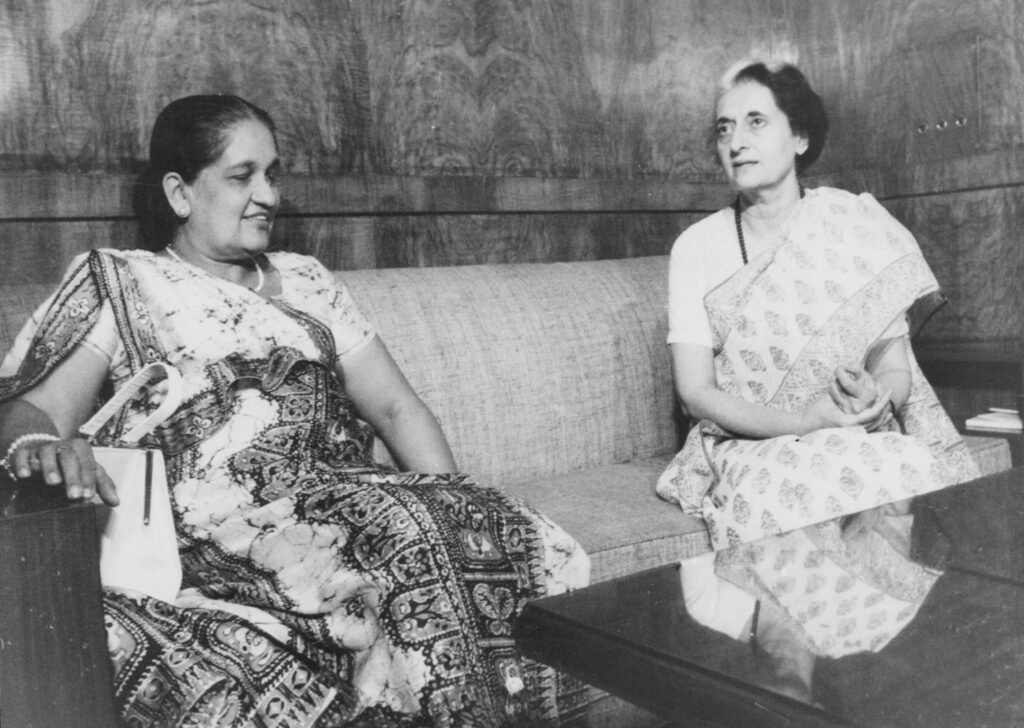
Upon independence in 1948, Sri Lanka faced a new dilemma: how to remain sovereign while sitting inside the logistics routes of the two global superpowers.
The “Indira Doctrine”: This era solidified India’s view that no external power should have a military footprint in Sri Lanka. This “Monroe Doctrine” for South Asia continues to dictate New Delhi’s policy in 2026.
The Zone of Peace (ZOP): In 1971, Prime Minister Sirimavo Bandaranaike championed a UN resolution to declare the Indian Ocean a “Zone of Peace.” It was a sophisticated attempt to use international law to keep the US and Soviet navies at bay.
The VOA and Trinco Tanks: Despite its non-aligned stance, Sri Lanka was often a theater of “Quiet Competition.” The U.S. lease of a Voice of America (VOA) transmitter and rumors of U.S. naval access to the Trincomalee oil tank farms deeply alarmed India, leading to the Indo-Lanka Accord of 1987.
IV. The Contemporary Era: Between Two Giants (1991 – 2026)
In 2026, Sri Lanka is the primary “pressure point” of the Indo-Pacific. The competition is no longer just between the West and the East, but between the established regional power (India) and the rising global heavyweight (China).
1. The Port Paradox: Colombo and Hambantota
The 21st century has seen the island’s geography “monetized” through massive infrastructure.
- Hambantota International Port (HIP): Often cited as a “debt-trap” case study, HIP has defied critics in 2025/2026. Under the 99-year lease to China Merchants Port, it saw a 175% year-on-year growth in cargo volume in 2025. In January 2026, the port set the stage for a 2-million TEU capacity, turning it from a white elephant into a functional regional powerhouse.
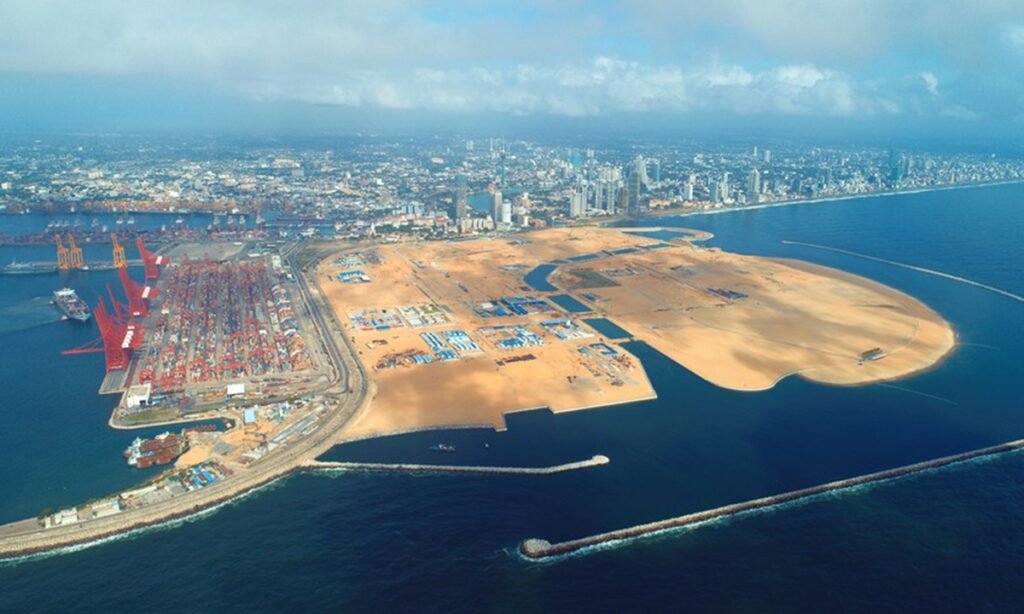
- Colombo Port City (CPC): As of early 2026, this reclaimed land is no longer a construction site but an operational Special Economic Zone. With 146 registered enterprises, it serves as a “Financial Gateway” to South Asia, mirroring the role of Dubai or Singapore.
2. The 2026 Balancing Act
Under the administration of President Anura Kumara Dissanayake and PM Harini Amarasuriya, Sri Lanka has refined the art of “Strategic Hedging.”
- The China Link: In October 2025, Sri Lanka secured a $3.7 billion refinery deal with Sinopec in Hambantota—the largest foreign investment in its history.
- The India Pivot: Simultaneously, India has integrated Sri Lanka into its security umbrella. In December 2025, “Operation Sagar Bandhu” saw the Indian Navy leading disaster relief efforts after Cyclone Ditwah, reinforcing India’s role as the “First Responder.”
- The Research Vessel Thaw: In early 2025, Sri Lanka lifted its ban on foreign research vessels, allowing Chinese ships like the Yuan Wang series to return, provided they adhere to a strict “Standard Operating Procedure” (SOP) developed with Indian and U.S. input.
Geography as a Perpetual Vocation
For Sri Lanka, geography is not just a fact; it is a vocation. For 2,600 years, the island has been the “Middle Kingdom” of the Indian Ocean. Its history shows that it is never a passive victim of great-power games, but a savvy “swing node” that uses its location to extract investment, security, and prestige.
In 2026, as the Adani-funded West Container Terminal in Colombo competes with the Chinese-run Port City, and as Indian P-8I aircraft monitor the waters around Trincomalee, the lesson is clear: Sri Lanka remains the crossroads where the world’s ambitions collide and coalesce.
Strategic Takeaways for 2026
- Economic Resilience: Following the 2024 debt restructuring, Sri Lanka has used its port assets to anchor its economic recovery, proving that maritime infrastructure is its most reliable “currency.”
- Trincomalee as a Green Hub: 2026 sees the transformation of Trincomalee into a “Green Hydrogen” hub, with Indian and Australian investment—merging ancient harbor depth with 21st-century energy needs.
- The “Big Ocean State” Identity: Sri Lanka is increasingly identifying as a “Big Ocean State” (a term coined by the Maldives), leveraging its vast Exclusive Economic Zone (EEZ) for deep-sea mining and “Blue Carbon” credits.