

To the casual observer, the Indian Ocean appears as a series of disconnected crises—a coup in an island nation, a drone strike in a shipping lane, or a new runway on a remote atoll. But for the strategist, these are not isolated events. They are “symptoms of the seam,” recurring flashpoints where the friction of global power competition meets the immutable facts of maritime geography. In 2026, as the “Quiet Center” of the early 2000s vanishes into history, we examine why certain coordinates on the map repeatedly draw the world’s gaze—and what they reveal about the structural instability of our age.
From our previous article: “the Indian Ocean has become the central arena of global trade, energy flows, and strategic competition”
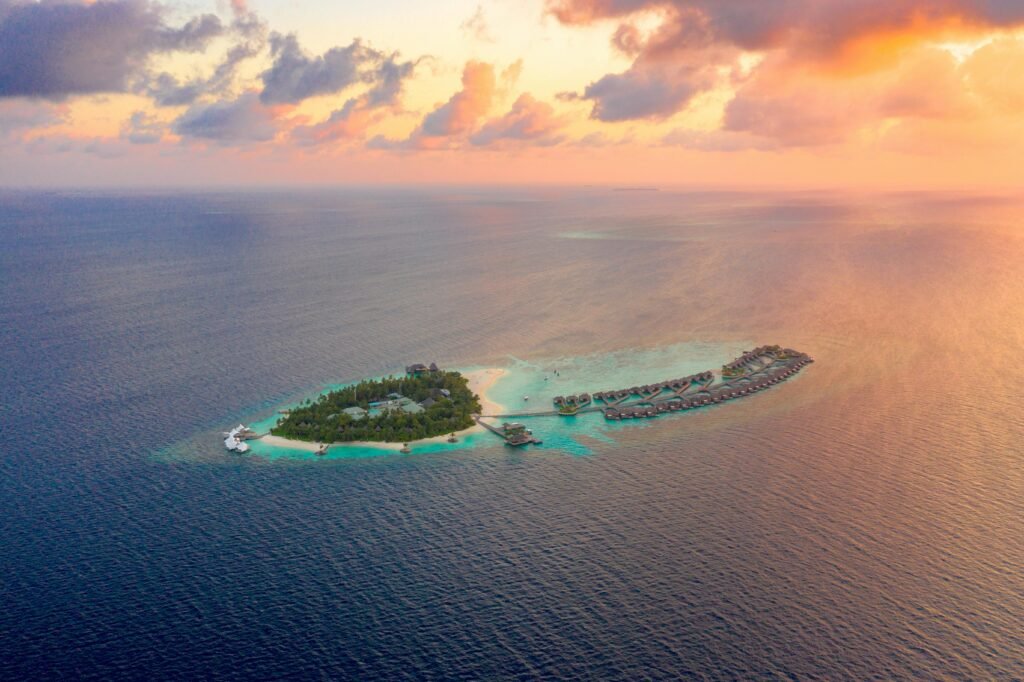
I. The Geography of Repetition: Why the Same Spots Resurface
Geopolitics in the Indian Ocean is rarely “new.” It is a cycle of rediscovery. The locations that draw global headlines today are often the same ones that defined the British Empire’s coaling stations or the Cold War’s listening posts.
1. The Eastern Gate: Andaman and Nicobar Islands
In early 2026, the Andaman and Nicobar archipelago has transitioned from a sleepy tourist destination to the “Hardened Pivot” of the Bay of Bengal.
- The Structural Shift: As Myanmar’s civil war continues to disrupt land-based trade (specifically the IMT Highway), India has been forced to look seaward.
- Why We Watch: These islands sit at the “mouth” of the Malacca Strait. In a 2026 context, the development of deep-sea ports and the “Blue Economy” initiatives here are less about fish and more about Maritime Domain Awareness (MDA).
If you control the Andamans, you see every Chinese submarine and tanker before they enter the central IOR.
2. The Central Watchtower: Agaléga and Diego Garcia
The southwestern quadrant of the Indian Ocean, once a “blind spot,” is now the most monitored patch of water on Earth.
- The Agaléga Factor: The 2025 completion of the 3,000-meter runway on Mauritius’s North Agaléga island—despite the 2024 damage from Cyclone Chido—marks a permanent shift. India’s P-8I surveillance aircraft now operate from this “unsinkable carrier.”
- The Sovereignty Friction: These spots are flashpoints because they represent the tension between national sovereignty and strategic rent. Small island states like Mauritius and Seychelles are no longer just dots on a map; they are the “Gatekeepers” of the central sea lanes, playing a high-stakes game of strategic hedging between New Delhi, Beijing, and Washington.
3. The Western Pressure Valve: Djibouti
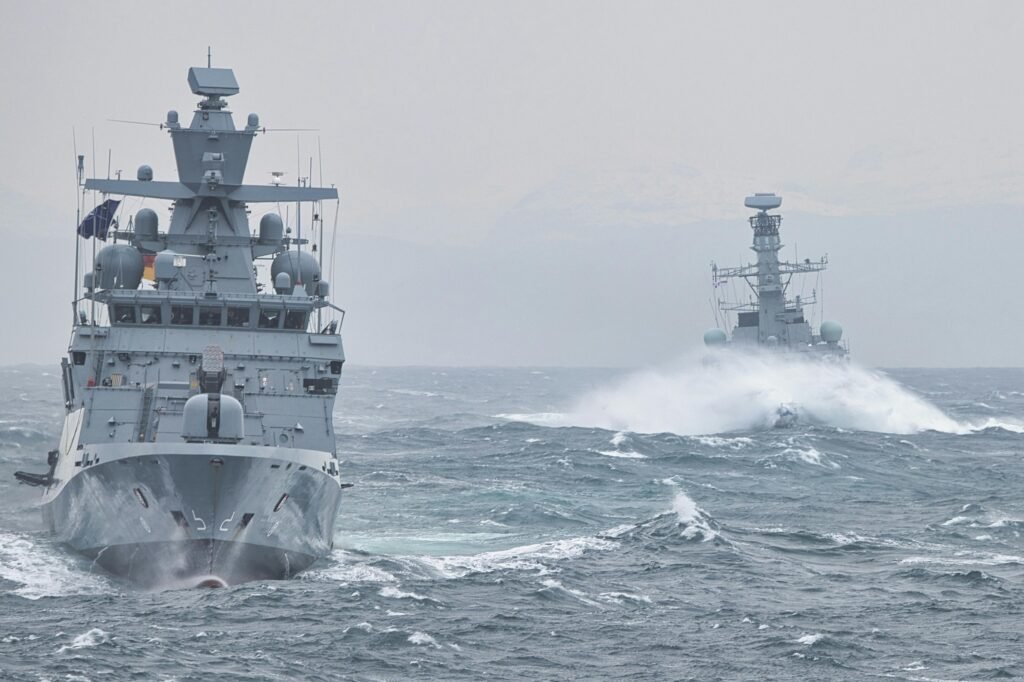
Djibouti remains the world’s most crowded “parking lot” for global navies. It is the only place on earth where Chinese, American, French, Japanese, and Saudi military bases exist within a few miles of each other.
- Why it Recurs: Because it is the only “stable” point on a volatile coast. As the Red Sea crisis of 2024-2025 proved, you cannot secure the Bab el-Mandeb from the water alone; you need a footprint on the shore. Djibouti is the “Stress Indicator” for the entire world—when the base activity there spikes, a global energy shock is usually imminent.
II. Flashpoints as Strategic Thermometers
The world “looks” at the Indian Ocean not just because of what happens there, but because of what those events reveal about the health of the global order.
| Flashpoint Type | Example (2025/2026) | What it Reveals |
|---|---|---|
| The “Dual-Use” Port | BNS Sheikh Hasina (Bangladesh) | Reveals the extent of Chinese “sub-surface” integration into South Asian security. |
| The Political Pendulum | Maldives Presidency | Reveals the fragility of regional alliances; a single election can flip a security architecture overnight. |
| The Maritime “Gray Zone” | Red Sea Drone Attacks | Reveals that major navies are currently “over-matched” by low-cost, asymmetric tech. |
| The Continental Bridge | Shaksgam Valley (2026) | Reveals the link between land borders (Himalayas) and sea power (CPEC/Indian Ocean access). |
III. The Infrastructure of Influence: Beyond the Gunboat
In 2026, “looking” at the ocean means looking at what lies beneath and beside it. The competition has moved from the surface of the water to the structural foundations of the region.
1. The Submarine Frontier
The launch of Chinese-built submarine facilities in Bangladesh and the increased frequency of nuclear-powered attack subs (SSNs) in the deep waters of the Lombok Strait are the most significant “unseen” developments. The IOR is becoming a “transparent” ocean for those with the best sensors, and a “black hole” for everyone else.
2. The Connectivity Wars (IMEC vs. BRI)
The proposed India-Middle East-Europe Economic Corridor (IMEC) is a direct structural challenge to China’s Belt and Road Initiative (BRI). When the world watches the UAE or Saudi ports, they are watching the construction of an alternative global trade spine. The competition is no longer just about who has the biggest navy, but who manages the data cables and hydrogen pipelines that sit on the seabed.
IV. The “Attention Trap”: What We Miss While Watching Flashpoints
The greatest risk in the Indian Ocean is that global attention is “spiky”—it focuses on the loud (piracy, missile strikes) while ignoring the silent (structural decay).
- Climate Fragility: The 2024-2025 cyclone season devastated littoral infrastructure. While we watch for Chinese ships, the ocean itself is “attacking” the very ports we are competing to own. A port that is underwater by 2050 is a strategic liability, not an asset.
- Non-State Integration: In 2026, the line between “pirate,” “militia,” and “state-backed proxy” has blurred. The “democratization of disruption” means that a small coastal group in East Africa can now exert more leverage over global trade than a middle-power navy could twenty years ago.
V. Synthesis: Why 2026 is the Year of the Stress Test
We keep looking at the Indian Ocean because it is the Mandala of Interests in its most raw form.
- China looks because of its “Malacca Dilemma”—an existential fear of being choked off.
- India looks because it views the ocean as its sovereign backyard—a “Net Security Provider” whose reputation depends on stability.
- The West looks because the Indian Ocean is the “Great Connector” between the Pacific theater and the European heartland.
The instability of the region is not caused by a lack of interest, but by an excess of it. Because every power views the same coordinates (Hormuz, Agaléga, Malacca) as vital to their survival, the system is structurally designed for friction.
Strategic Takeaways
- The “Island Bastion” is Back: Small islands (Andamans, Agaléga, Coco Islands) are the new front lines. Expect more “dual-use” infrastructure projects framed as “environmental research” or “fisheries support.”
- Asymmetry is the Default: The era of “Command of the Sea” is being replaced by “Denial of Access.” Small actors now have a “veto” over global trade.
- The Rise of Mini-laterals: Groups like the Quad or the India-UAE-France trilateral are replacing large, sluggish institutions (like IORA) because they allow for faster response to flashpoints.
- Sovereignty is a Commodity: Littoral states will continue to “monetize” their geography, leading to a transactional security environment where alliances are leased, not built.
Pingback: Why the Indian Ocean Matters in 21st Century Geopolitics
Pingback: UNCLOS and IORA: Governing the Indian Ocean | Maritime Law